
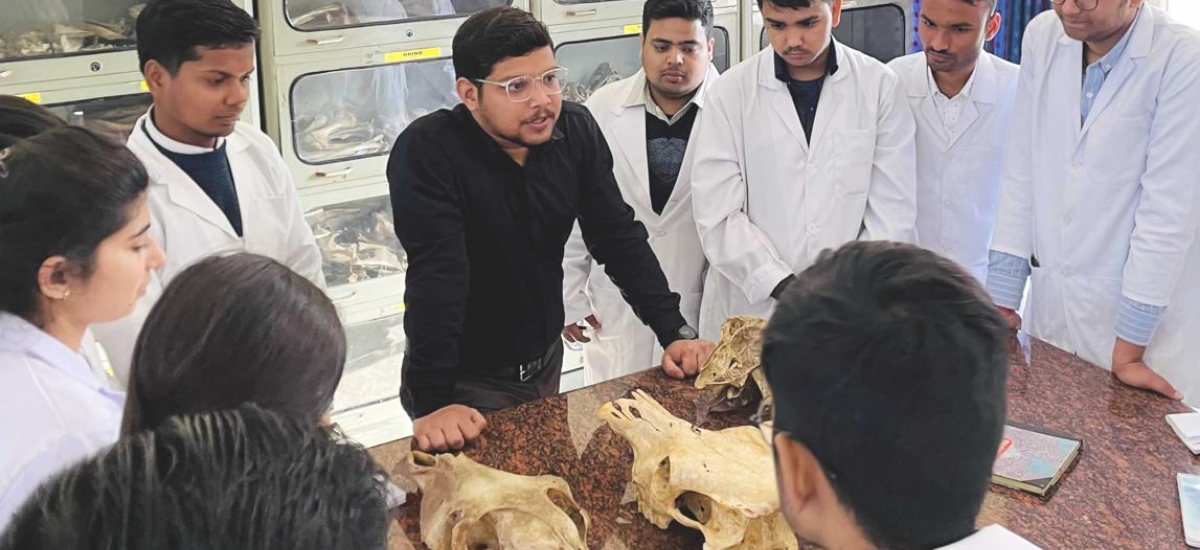
India’s veterinary education system is entering a transformative phase driven by technology, policy reforms, research innovation, and the growing importance of animal healthcare. As the livestock, dairy, poultry, and pet care industries continue to expand, the demand for highly skilled veterinarians is increasing rapidly. Veterinary education in India is no longer limited to traditional classroom learning; it is evolving into a modern, research-oriented, and technology-driven discipline that aligns with global healthcare standards.
The future of veterinary education in India will be shaped by advancements in artificial intelligence, digital learning, One Health approaches, biotechnology, and multidisciplinary education models promoted under the National Education Policy (NEP) 2020.
Growing Importance of Veterinary Science
India has one of the largest livestock populations in the world, making veterinary science a critical sector for food security, public health, rural development, and economic growth. Veterinarians today are not only responsible for animal treatment but also contribute to disease prevention, food safety, wildlife conservation, and zoonotic disease control.
The rise of pet ownership, dairy farming, poultry production, and animal welfare awareness has expanded career opportunities for veterinary graduates. Modern veterinarians are now expected to possess expertise in clinical practice, diagnostics, biotechnology, epidemiology, animal nutrition, and public health.
Impact of NEP 2020 on Veterinary Education
The implementation of the National Education Policy (NEP) 2020 is expected to bring major reforms in higher education, including veterinary science. The policy emphasizes multidisciplinary learning, research excellence, skill development, digital education, and institutional autonomy.
Some expected changes include:
Greater integration of veterinary colleges with multidisciplinary universities
Increased focus on practical and skill-based education
Enhanced funding opportunities through research grants
Adoption of digital and blended learning methods
Promotion of innovation, startups, and entrepreneurship
NEP 2020 also encourages collaboration between academic institutions, industries, and international organizations, which can significantly improve the quality of veterinary training in India.
Integration of Technology and Digital Learning
Technology is becoming one of the most influential factors in veterinary education. Future veterinary classrooms are expected to incorporate:
Virtual simulations for surgical training
AI-based diagnostic systems
Online learning platforms and virtual laboratories
Telemedicine and remote consultation training
Smart livestock monitoring technologies
Digital learning platforms and blended education models are already gaining popularity in Indian higher education.
Students will increasingly learn through interactive modules, augmented reality, and clinical simulation tools, helping them gain hands-on experience before entering real-world practice.